
In most of the manufacturing facilities, procurement has been widely considered a support activity — a unit that holds the factory in motion by sourcing the correct components at the correct price. However, in the modern dynamic industrial environment, procurement is so much more than that.
In K and G Engineering and Procurement Limited, we are sure that procurement is not about what you purchase anymore but rather what you empower.
The correct sourcing choices are able to enhance uptime, unlock efficiency, and lead innovation throughout complete production lines.
Procurement The Secret Engine of Manufacturing Innovation
All contemporary manufacturing facilities are strained to do better and do more—work faster, waste less, and minimise downtimes. In order to achieve these objectives, the procurement department should closely collaborate with engineering.
When the engineering teams and the procurement specialists work together at the beginning, wonders occur:
- New technologies are presented at a greater pace.
- Machines are purchased with a high degree of reliability.
- The supply chain is not something added later, but rather innovation is incorporated in it.
Strategic procurement is not only about strategy — it is about action.
Spare Parts to Smart Solutions
The conventional procurement is aimed at replacement — by means of locating compatible parts, keeping the machines running. But forward-thinking engineering procurement teams look at the bigger picture:
- Will a smarter section enhance efficiency?
- Will the upgrade save any energy or time in maintenance?
- Does it have another technology that enhances productivity?
By asking these questions, procurement becomes a source of innovation. For example, sourcing an energy-efficient drive instead of a standard motor isn’t just a replacement — it’s an upgrade that impacts performance, sustainability, and cost savings.
Team Procurement: Where Innovation Begins
Innovation favours cooperation, both among the internal departments and with the suppliers.
The most effective suppliers will not only deliver parts, but they will also provide knowledge, suggest technologies, and create mutually beneficial solutions.
This has been experienced at K & G. By having the clients engage us at early stages of their planning, we can advise them on alternative solutions, propose components that perform better, and source optimally towards long-term outcomes. Innovation occurs at that point where engineering knowledge and procurement expertise intersect.
Smart Information Procurement
Data is the driver of modern procurement.
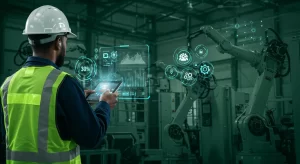
From tracking supplier performance to predicting part needs based on machine data, digital tools and analytics are transforming how engineering procurement adds value.
Through the use of ERP applications such as ODOO and integrating predictive insights, industrial plants can:
- Reduce unplanned downtime.
- Enhance the forecasting of spare parts.
- Enhance supplier efficiency.
- Reduce lead times without reducing quality.
This, with engineering insight, makes a procurement function proactive, rather than reactive.
The Future of Procurement Is Strategic — and Innovative
The manufacturing industry is evolving — and those companies that view procurement as a source of innovation will be in the vanguard of the change.
It can be as simple as a change of mindset to embrace automation-ready systems, to use sustainable materials, to adopt predictive maintenance, etc.
Procurement is not a cost center; it is a value generator.
At K & G Engineering and Procurement Limited, we’re proud to partner with manufacturers who share this vision — building a future where every part sourced contributes to smarter, stronger, and more sustainable industries.